Demographic Patterns Directing Table Game Selections via Mobile Reward Structures in International Wagering Apps
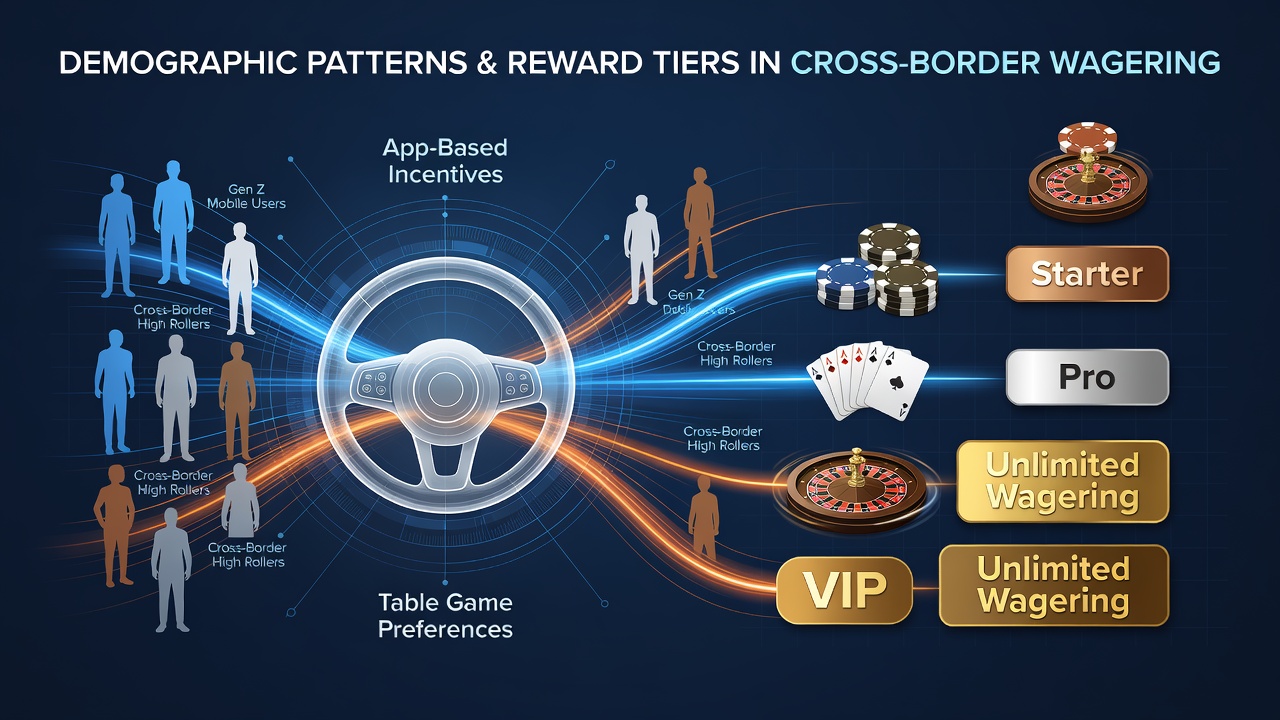
Demographic factors such as age, geographic origin, and income levels continue to shape how players approach table games within app-based reward systems that operate across national borders, and data from multiple markets illustrate these connections through tracked player behavior and tier progression rates. Younger users aged 21 to 35 often gravitate toward blackjack variants that emphasize decision trees and quick reward accumulation, while older cohorts show stronger engagement with roulette options that align with slower-paced advancement ladders in the same applications. Cross-border environments add layers because regulatory differences in places like the United States, Canada, and parts of Asia alter which reward tiers become accessible first, leading operators to adjust game menus based on incoming traffic patterns.
Age and Regional Variations in Game Selection
Research from university gaming centers shows that players in North American markets tend to climb mobile reward tiers faster when blackjack tables offer instant multiplier bonuses tied to deposit-free trials, whereas European users frequently shift toward wheel-based games once they reach mid-tier status that unlocks live dealer customization. In June 2026 several operators noted a spike in cross-border sign-ups from Asian demographics who prioritized roulette after receiving tiered free spin equivalents converted into table credits, and these movements occurred alongside updates to mobile interfaces that highlighted regional game popularity statistics. Observers note that income brackets also play a role, with higher-earning groups advancing through loyalty structures more rapidly because they engage multiple table variants simultaneously across different jurisdictions.
Reward Tier Mechanics and Cross-Border Adjustments
App developers structure advancement programs so that early tiers grant access to simplified table rules while later levels introduce complex side bets and live interaction features, and these mechanics respond to demographic signals collected through device location and play history. Data indicates that users crossing from one regulatory zone to another often reset or accelerate their tier progress depending on whether the destination market permits zero-deposit entry points for specific games, which in turn steers preferences toward blackjack for strategic players or roulette for those seeking chance-driven climbs. Industry reports compiled by the International Gaming Institute highlight how these tiered systems create feedback loops where demographic clusters reinforce their own game choices through shared reward pathways.
What's interesting is how mobile platforms now embed location-aware filters that surface table games matching the prevailing preferences of similar demographic profiles already active in that region, and this automation reduces friction for new users entering from abroad. Payment method compatibility further influences the picture because certain e-wallet options common in one country unlock faster tier jumps when paired with particular table selections, prompting operators to map demographic payment trends against game menus.
Behavioral Data and Tier Progression Patterns

Studies tracking thousands of accounts reveal that female players in the 30 to 45 age range demonstrate higher retention in roulette environments once they reach reward tiers granting personalized dealer interactions, while male counterparts in similar brackets show steadier movement through blackjack progressions when cross-border apps provide strategy overlays at mid-levels. These patterns hold across multiple platforms even as individual regulations shift, because the underlying demographic data continues to drive menu personalization and bonus allocation rules.
Operators monitor session length and game-switching frequency to refine tier benefits, and evidence suggests that users from higher-density urban areas advance more quickly when reward structures emphasize social features like shared live tables. Regulatory updates in various jurisdictions during early 2026 prompted several platforms to recalibrate their cross-border offerings so that demographic signals from new markets could integrate without disrupting existing tier ladders.
Integration of Payment Systems and Demographic Signals
Payment innovations continue to intersect with demographic steering because certain digital transfer methods popular among specific age groups or regions trigger automatic tier boosts when used on table games, and this linkage encourages players to stay within preferred variants. According to analysis from the European Gaming and Betting Association, cross-border users who rely on region-specific wallets often select roulette over blackjack once their accumulated rewards reach thresholds that favor wheel multipliers, creating measurable shifts in overall platform traffic.
Those who've examined longitudinal datasets point out that these interactions produce predictable clusters where younger international users cluster around fast-advancing blackjack tiers while older domestic profiles consolidate around roulette once loyalty benefits stabilize. The result is a self-reinforcing cycle in which app algorithms learn from demographic behavior and adjust available table options accordingly, all while remaining within the constraints of each operating jurisdiction.
Conclusion
Demographic patterns remain central to how reward tiers guide table game preferences in cross-border mobile wagering environments, and ongoing data collection ensures that operators can respond to shifts in age, region, and payment behavior as they emerge. Continued monitoring through 2026 and beyond will likely refine these systems further, maintaining the connection between user profiles and the table variants that advance most efficiently within each tier structure.