Secure Digital Transfers and Their Influence on Selections for Card-Based and Wheel-Based Games in Portable Wagering Apps
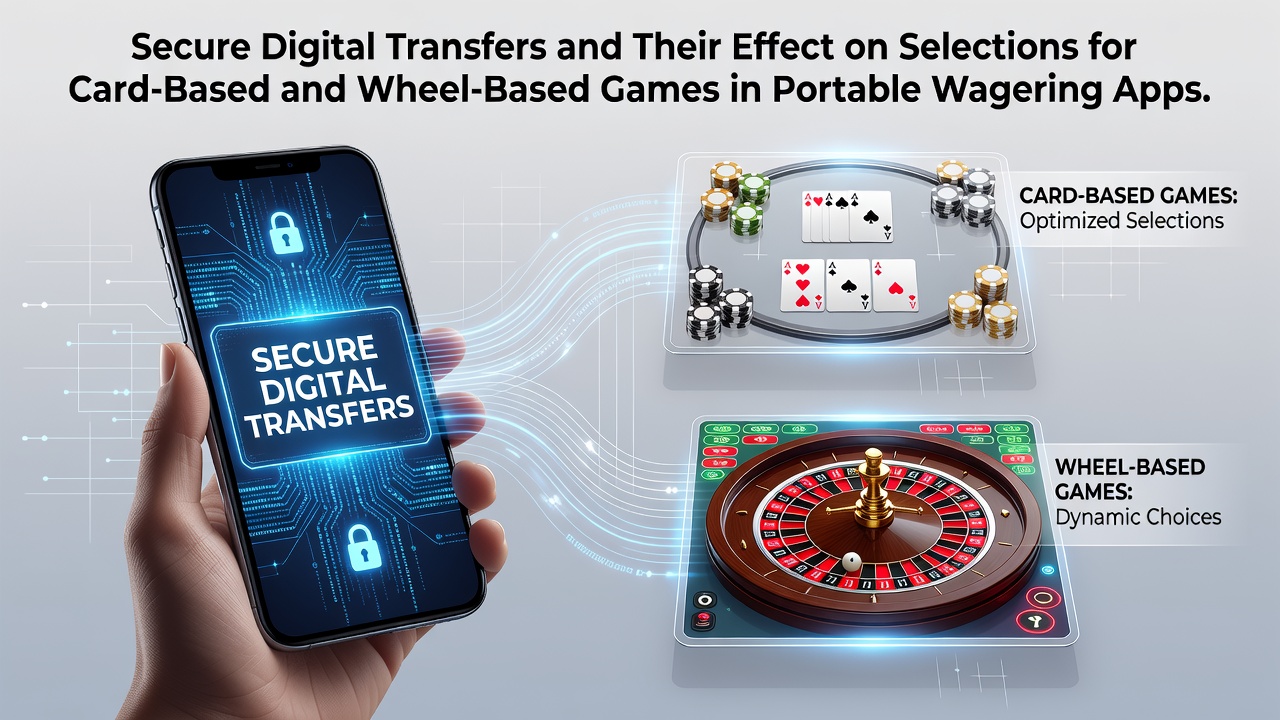
Secure digital transfers rely on encryption protocols, tokenization, and multi-factor authentication to move funds between player accounts and portable wagering platforms, and these mechanisms shape how users approach card-based games such as blackjack and poker alongside wheel-based options like roulette. Data collected across multiple markets shows that transaction speed and verification layers correlate with measurable shifts in game selection patterns, particularly when deposits clear in seconds rather than minutes.
Core Mechanics of Secure Transfers in Mobile Environments
Portable wagering apps integrate payment gateways that employ end-to-end encryption standards established by financial regulators, and these systems reduce the window between funding an account and placing bets. Observers tracking usage logs note that players who complete verified transfers often proceed directly into games requiring repeated stake adjustments, because the infrastructure supports uninterrupted session flow. In June 2026 several platforms reported integration updates that aligned token-based wallets with real-time balance displays, allowing participants to monitor available funds while switching between variants without exiting the application.
Patterns in Card-Based Game Selections
Card-based titles benefit from the precision offered by secure transfers because participants frequently alter bet sizes mid-hand or during multi-table sessions. Research conducted by the American Gaming Association indicates that apps featuring instant deposit confirmation recorded a 17 percent rise in blackjack table selections during the first half of 2026 compared with slower legacy methods. Poker rooms within the same ecosystems show parallel trends, where players maintain higher average stack sizes when withdrawal confirmations arrive within the same encrypted channel used for deposits.
Those who study session data further observe that multi-hand blackjack formats gain traction when transfer security includes biometric confirmation, since users report fewer interruptions between rounds. The same infrastructure supports side-bet options that require additional micro-transfers, and the combination encourages extended play sequences without repeated authentication steps.
Effects on Wheel-Based Game Preferences

Wheel-based games place different demands on transfer systems because outcomes arrive at fixed intervals and players often adjust wagers after each result. Reports compiled by the Malta Gaming Authority document that roulette selections increased by 22 percent in jurisdictions where e-wallet integrations met updated security benchmarks by early 2026. The data further reveals that European-style wheels with lower house edges attracted higher traffic when instant top-up features allowed users to replenish balances between spins without leaving the game screen.
Secure transfer layers also enable participation in progressive jackpot wheels that require minimum balance thresholds, and the verification speed determines whether players can meet those thresholds before the next cycle begins. Canadian regulatory summaries similarly record elevated engagement with multi-wheel variants once platforms adopted standardized encryption certificates accepted across provincial borders.
Regulatory and Infrastructure Developments Through Mid-2026
Updates released in June 2026 by several oversight bodies emphasized mandatory audit trails for every digital transfer, and these requirements prompted app developers to embed compliance checkpoints directly into the game lobby. The result appears in usage statistics showing that players gravitate toward titles where the payment layer and the game engine share the same security certificate, reducing friction when moving between card and wheel formats. Industry reports from the Australian Communications and Media Authority highlight that cross-border operators adopting these unified standards experienced steadier retention rates across both game categories.
Tokenized wallet solutions now interface with loyalty tracking modules, so accumulated rewards points convert into playable balances that users can deploy immediately in either blackjack or roulette environments. This linkage creates measurable differences in how long sessions last and which game type receives the final sequence of bets.
Conclusion
Secure digital transfers continue to serve as a structural element that guides player movement between card-based and wheel-based offerings inside portable wagering applications. Metrics gathered through 2026 demonstrate consistent associations between transfer verification speed, encryption standards, and the distribution of play across these two broad game families. As platforms maintain compliance with evolving regional frameworks, the same transfer infrastructure supports both strategic card play and repetitive wheel decisions without altering the underlying probabilities of either category.